AI-Powered Restaurant Management: Digital Transformation of the F&B Sector
AI applications in the restaurant industry: order forecasting, inventory optimization, digital menu management, kitchen automation, customer analytics and F&B technology trends.
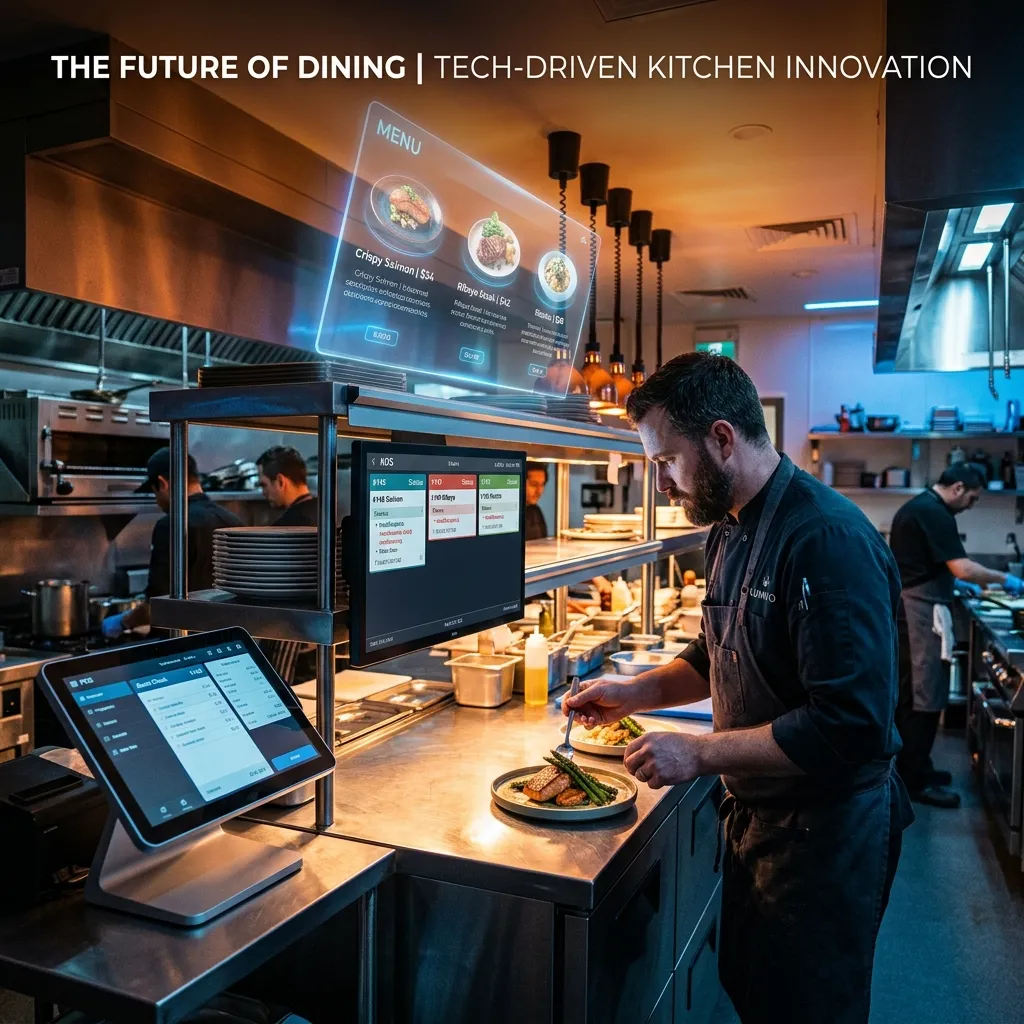
The restaurant industry is one of the most competitive and lowest profit margin industries in the world. The average restaurant’s profit margin hovers between three percent and five percent, meaning every penny counts. In 2026, AI and digital transformation are no longer a luxury but a matter of survival for restaurants looking to maintain and grow those slim margins.
Current Challenges of F&B Industry
Restaurant owners fight battles on multiple fronts every day. The ever-increasing cost of raw materials, the difficulty of finding and retaining qualified staff, the high commission rates of food platforms, the ever-rising customer expectations and increasing competition, each of these challenges alone is enough to bankrupt a business.
In traditional restaurant management, decisions are mostly based on intuition. The chef decides how many ingredients to prepare today based on his experience. The business owner determines the number of personnel according to patterns remembered from past years. Menu pricing is done by looking at competitors. Although this intuitive approach works sometimes, it cannot be optimized without systematic data analysis.
Order Forecasting and Demand Analysis
One of the most powerful applications of artificial intelligence in the restaurant industry is order prediction. Future order volume can be predicted with high accuracy by analyzing variables such as historical order data, weather, holiday calendar, special days, campaign periods and local events.
Knowing how many people will be coming to a restaurant on a Friday night optimizes everything from staff scheduling to ingredient preparation. Data shows that takeout orders increase on a rainy Tuesday, while brunch demand peaks on a sunny Sunday afternoon, and the system recommends preparation accordingly.
Demand analysis is not limited to just volume. Which menu items are popular at what times, which combinations are ordered together, how seasonal trends influence menu choices, all these patterns are automatically detected by AI.
Digital Kitchen Display Systems (KDS)
The era of paper orders and shouting waiters is coming to an end. Kitchen Display System (KDS) is a technological revolution that allows orders to be transmitted to the kitchen via digital screens.
The advantages of KDS are numerous. The risk of order loss is reduced to zero, paper receipts won’t get wet, torn or lost. Preparation times are automatically tracked and delays are immediately reported to the manager. Orders for different stations (grill, cold kitchen, dessert) are automatically separated. Improvements in average order lead time are reported to be between twenty and thirty percent.
Color coding system increases the efficiency of kitchen equipment. New orders are shown in white, prepared orders in yellow, overdue orders in red, and completed orders in green. This visual coding supports quick decision-making in a noisy and stressful kitchen environment.
QR Menu and Digital Ordering
QR menu applications, born out of necessity during the pandemic period, have become an integral part of the customer experience in 2026. By scanning the QR code at their table, the customer views the menu, places their order, and even pays, the waiter simply carries the food to service.
The advantages of the QR menu to the business are multidimensional. Menu changes are updated instantly, printing costs are reduced to zero. The photo menu makes it easier for the customer to choose their meal and is reported to increase the average basket value by fifteen to twenty-five percent. Allergen information and nutritional values are automatically displayed. Service to foreign tourists becomes easier with multilingual menu support.
Stock Management and Food Waste
Approximately one-third of the food produced worldwide is wasted. The restaurant industry is a major source of this waste. Artificial intelligence-supported stock management reduces food waste and reduces costs.
Recipe-based stock tracking automatically calculates which materials are used and how much for each order. At the end of the day, theoretical stock is compared with actual stock, if there is a difference, reasons such as wastage, portion control or theft are investigated.
The automatic order recommendation system constantly monitors material levels and creates an order recommendation to the supplier before they fall below a critical threshold. The supplier offers the most affordable option by comparing prices.
Expiration date tracking reports upcoming expiration dates and places these ingredients on a priority use list. Waste is minimized by automatically creating the “Ends Today” menu.
Multi-Platform Integration
In 2026, a restaurant does not only serve physical customers. It takes orders via Yemeksepeti, Getir, Trendyol Yemek, Migros Yemek and many other platforms. Each platform has its own panel, its own pricing structure and its own rules.
Managing this multi-platform complexity is a significant operational burden. Logging in to each platform separately and checking orders, updating menu prices separately on each platform, tracking different commission rates and making consolidated reporting, all this takes hours when done manually.
An integrated system combines orders from all platforms on one screen. Menu changes are made from a single place and are automatically reflected on all platforms. Consolidated reports show which platform brings the most turnover, which platform has the highest commission cost, and which platforms should be prioritized in terms of profitability.
Franchise and Multiple Branch Management
Central management is critical for growing restaurant chains. The franchise headquarters should be able to monitor the performance of all branches from a single dashboard.
Central menu management guarantees that the same menu is presented to the same standards in all branches. Price discrimination can be made based on branches, while the Istanbul branch may apply different prices, the Ankara branch may apply different prices.
Inter-branch performance comparison enables the transfer of the most successful branch’s practices to other branches. Daily sales reports, personnel efficiency, customer satisfaction and stock turnover rate are compared between branches.
The B2B procurement module provides volume discounts by combining central purchasing and the material needs of all branches as a bulk order.
Customer Analysis and Loyalty Programs
Artificial intelligence provides the opportunity to offer personalized experiences by analyzing customer behavior. Customer segmentation is made based on order history: VIP customers (frequent and high order orders), regular customers, occasional customers and at-risk customers (whose order frequency has decreased recently).
Different marketing strategies are applied for each segment. Special discounts and early access campaigns are offered to VIP customers, recovery offers to at-risk customers, and welcome discounts to new customers.
IPEC Labs and NŞEFİM: Türkiye’s F&B Technology Platform
NŞEFİM platform, which we developed as IPEC Labs, is a comprehensive restaurant management system that combines all the above-mentioned technologies under one roof. We offer Türkiye’s most comprehensive F&B SaaS platform with POS, KDS, QR Menu, Stock Management, Platform Integrations (Yemeksepeti, Getir, Trendyol, Migros), Franchise HQ, B2B Procurement and Finance modules.
NŞEFİM aims to reduce the costs while increasing the operational efficiency of restaurant owners with real-time order flow, AI-supported stock forecasting, consolidated cash reports and multi-branch central management opportunities with WebSocket.
Subscribe to our newsletter!