Enterprise Cybersecurity 2026: Agentic Threats, Zero Trust, and Quantum Readiness
2026 enterprise cybersecurity landscape: AI-powered attacks, autonomous defense systems, Zero Trust maturity, deepfake threats, CTEM and post-quantum cryptography.
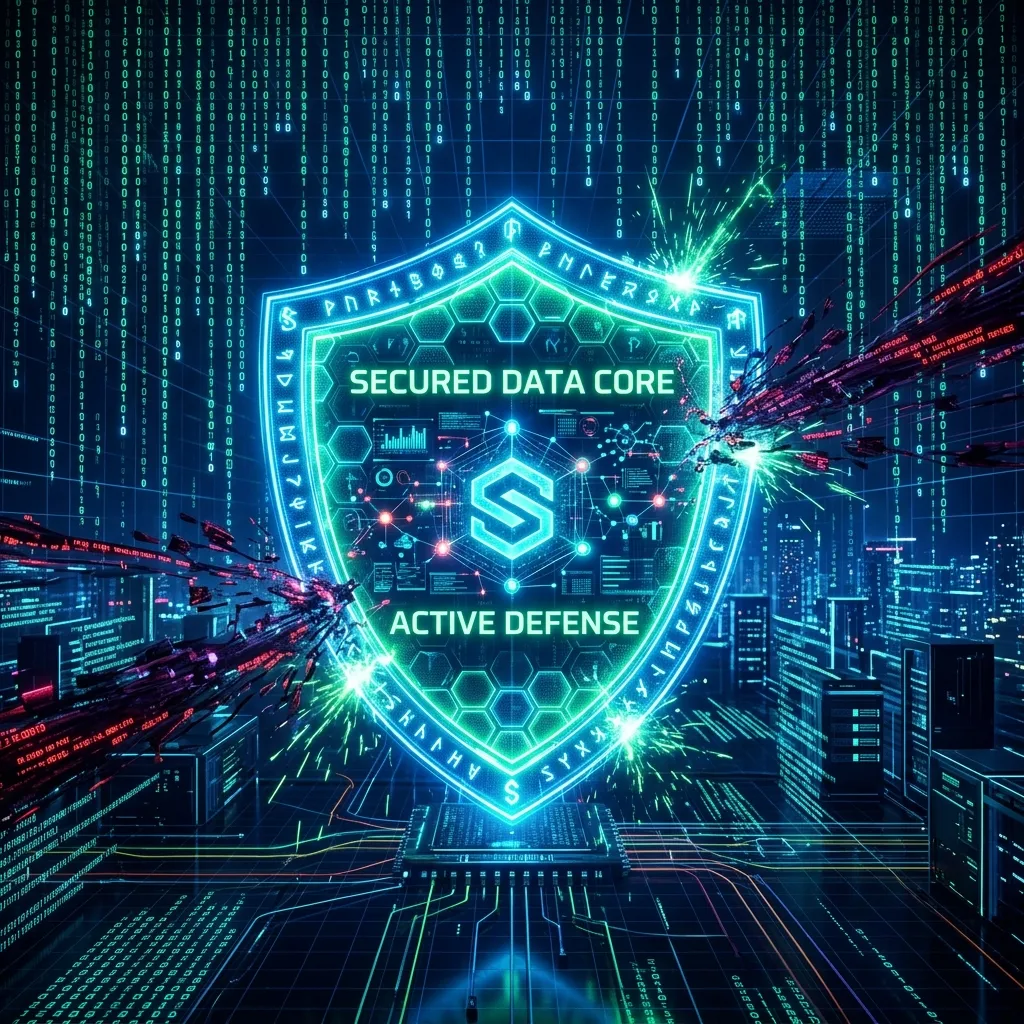
The world of cybersecurity is experiencing an unprecedented transformation in 2026. Artificial intelligence has created revolutionary changes on both the offensive and defensive fronts, completely reshaping the threat landscape. No longer is cybersecurity just an IT issue, it is a strategic business priority discussed at the board level.
Agentic AI Attacks: The New Dimension of the Threat
Threat actors are now launching attacks using artificial intelligence agents. This is a paradigm shift in the history of cybersecurity. While traditional attacks rely on manual effort from human attackers, agentic attacks are autonomous and scalable.
Autonomous reconnaissance agents automatically map the target organization’s network structure, open ports, employee information and technologies used. This discovery process can be performed a hundred times faster than human attackers.
Adaptive malware is malicious software that constantly changes itself to evade traditional antivirus signature-based detection. Each time it runs, it uses a different encryption method, exhibits a different behavior pattern, and takes on formats that security software cannot recognize.
Polymorphic phishing produces personalized phishing messages specific to each target. AI creates highly persuasive messages by analyzing the target’s LinkedIn profile, social media posts, and email patterns. It has become almost impossible to detect with traditional phishing training.
Lateral movement automation enables expansion to other systems without human intervention after entering a network. The AI agent aims to reach critical assets in the shortest way by understanding the network topology.
Autonomous Defense Systems
When attacks are automated, it is inevitable that defense will also be automated. The reaction speed of human analysts cannot keep up with machine-speed attacks.
SOC (Security Operations Center) automation is transitioning to agentic defense models in 2026. AI agents monitor network traffic 24/7, detect anomalies, prioritize and automatically perform initial response. Human analysts handle critical cases where AI escalates.
SOAR (Security Orchestration, Automation and Response) platforms run automated response playbooks to security incidents. When a suspicious account is detected, the account is automatically locked, the relevant team is notified, and forensic data collection begins, all within seconds.
Threat hunting agents proactively look for unknown threats rather than known threats. Detects unusual patterns in network traffic, anomalous user behavior, and hidden command and control (C2) communications.
Zero Trust: Trust No One, Verify Everyone
Zero Trust architecture has become the default approach to enterprise security in 2026. The traditional “castle and moat” model, protecting the network perimeter and trusting those inside, has proven completely inadequate in the age of cloud, remote work, and mobile access.
The basic principle of Zero Trust is simple: no user, device or network location is automatically trusted. Every access request is verified every time.
Continuous authentication ensures that the user is constantly verified throughout the session, not just at the time of login. Anomalies in user behavior (access at unusual times, connection from different geography, unusual data access patterns) require additional verification.
Micro-segmentation prevents a security breach in one region from spreading to other regions by dividing the network into small security zones. Every application, every database and every service is protected within its own security perimeter.
The principle of least privilege gives users only the minimum access required to perform their tasks. An accountant doesn’t need to access engineering servers, a developer doesn’t need to access the financial database.
Phishing-resistant authentication is replacing traditional password and SMS OTP in 2026. Physical security keys and passkeys compatible with the FIDO2/WebAuthn standard make phishing attacks technically impossible.
Deepfake and Synthetic Identity Threats
Fake voice, video and synthetic identities produced by artificial intelligence are the most dangerous social engineering tools of 2026.
CEO fraud (Business Email Compromise) is now carried out with voice cloning. The attacker creates a highly realistic voice clone from a few seconds of the CEO’s voice sample (YouTube video, podcast recording) and calls the finance department and orders an urgent transfer.
Biometric authentication bypassing involves fooling facial recognition systems with deepfake video. Liveness detection technologies are being developed against this threat, but the arms-armor race continues.
Digital provenance are technologies that enable AI-generated content to be distinguished from real content. The C2PA (Coalition for Content Provenance and Authenticity) standard cryptographically verifies the creation and editing history of digital content.
CTEM: Continuous Threat Exposure Management
Continuous Threat Exposure Management (CTEM) is a proactive approach that replaces traditional periodic security scans.
In the traditional approach, security scanning occurs monthly or quarterly. New vulnerabilities that arise between two scans remain undiscovered. CTEM, on the other hand, constantly scans for vulnerabilities in real time and performs risk-based prioritization.
Attack path analysis maps all possible paths an attacker could use to reach critical assets from the outside. The most dangerous roads are closed first.
Supply Chain Security
The interconnected nature of the SaaS ecosystem has made supply chain attacks one of the most dangerous attack vectors. Compromise of a trusted software supplier means that all customers using that supplier are put at risk.
Software Bill of Materials (SBOM) inventories all components and dependencies used in the software. Once a vulnerability is discovered in a component, all affected applications can be identified immediately.
Vendor risk assessment is a systematic process that evaluates the security maturity of third-party vendors. Security certificates, penetration test reports and incident response plans are reviewed.
Quantum Computing Threat
Quantum computers have the potential to break existing asymmetric encryption algorithms (RSA, ECC). Although “Q-Day”, the day when quantum computers become powerful enough to break existing encryption, has not yet arrived, preparations have already begun.
The “Harvest Now, Decrypt Later” strategy envisions attackers harvesting encrypted data today and decrypting it with quantum computers in the future. Therefore, the transition to quantum-secure cryptography for long-lived secrets (state secrets, trade secrets) is urgent.
Post-quantum cryptography algorithms (CRYSTALS-Kyber, CRYSTALS-Dilithium) standardized by NIST began to be implemented by early adopters in 2026.
IPEC Labs Security Commitment
As IPEC Labs, we meticulously apply the security principles mentioned in this article in all our projects, user data in NZeca AI, restaurant and customer information in NŞEFİM, student data in the Smart School Ecosystem. Zero Trust architecture, AES-256 encryption, TLS 1.3 communication security, data isolation with Row-Level Security, regular penetration tests and full compliance with KVKK are the concrete components of our security commitment.
Subscribe to our newsletter!