Digital Health and Wearable Technology 2026: The Future of Healthcare
2026 digital health ecosystem: clinical-grade wearable devices, telemedicine hybrid care models, AI-assisted diagnostics, continuous health monitoring and health tech trends.
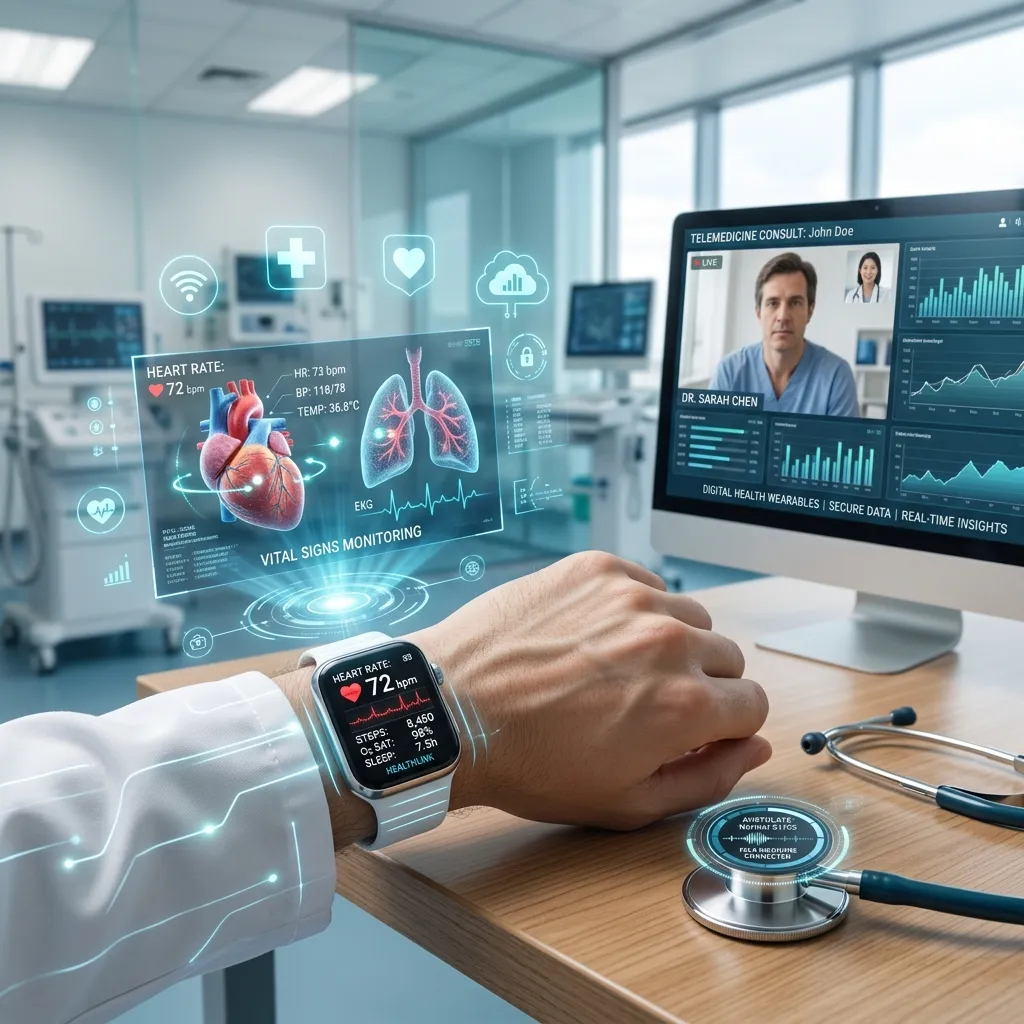
The healthcare sector is one of the areas experiencing the deepest effects of digital transformation. In 2026, digital health is no longer an experimental concept, it is a core component of hospital infrastructure, patient care, and clinical research. Wearable devices are evolving from consumer products to clinical-grade medical devices, telemedicine is evolving into a hybrid care model, and artificial intelligence is becoming an indispensable part of clinical workflows.
Wearable Technology: From Consumer Product to Medical Device
A dramatic transformation is taking place in the field of wearable healthcare devices in 2026. Smartwatches and fitness bands no longer just track steps and calories, they produce FDA-approved clinical-grade health data.
Continuous heart rhythm monitoring can detect life-threatening heart rhythm disorders such as atrial fibrillation (AF) early. In the traditional method, to diagnose AF, the patient had to be in the hospital or carry a Holter monitor at the time of symptoms. Continuous monitoring with smartwatches can detect AF attacks even during symptom-free periods.
Blood oxygen saturation (SpO2) monitoring has become critical and a permanent feature during the COVID-19 pandemic. It is used for sleep apnea detection, chronic lung disease monitoring, and safety in high altitude activities.
Non-invasive blood sugar monitoring is revolutionary for diabetics. The traditional method required the patient to draw blood from his finger, a method that was painful, laborious and provided limited measurements. In 2026, needle-free, continuous blood glucose monitoring with optical sensors and bioimpedance technologies becomes a reality.
New form factors are diversifying the wearable market. Smart rings, smart glasses and health-enabled headsets are making data collection less obtrusive and more habit-driven. A smart ring can continuously monitor sleep quality, body temperature, heart rate variability (HRV) and stress level.
Telemedicine: From Video Conferencing to Hybrid Care
Telemedicine was adopted out of necessity during the pandemic. In 2026, it matured into a comprehensive virtual care ecosystem.
The hybrid care model seamlessly combines digital and in-person healthcare. Initial triage and mild symptoms are handled via video consultation, chronic disease management is handled through regular virtual follow-ups, cases requiring physical examination are referred to a face-to-face appointment, and postoperative follow-up is largely done remotely.
Mental health services are the fastest growing segment of telemedicine. Therapy sessions can be conducted via video, instant support chatbots can be activated in times of crisis, and continuous mood monitoring applications enable early intervention.
Remote patient monitoring (RPM) is revolutionizing chronic disease management. Patients with chronic conditions such as diabetes, hypertension and heart failure are constantly monitored from their homes. When abnormal values are detected, an automatic alert is sent to the healthcare team and proactive intervention is made.
Artificial Intelligence in Clinical Workflows
AI is transforming the healthcare industry in three critical areas in 2026.
Clinical documentation automation solves one of physicians’ biggest sources of time loss. AI scribes automatically create clinical notes by listening to the patient-physician conversation. This saves physicians an average of two hours per day, time that can be devoted to direct patient care.
Predictive analytics predicts health events before symptoms appear by analyzing continuous data streams. Acute situations such as heart attack risk, diabetic crisis, asthma attack can be detected in advance and preventive intervention can be made.
Clinical decision support systems help physicians in diagnosis and treatment planning. With image analysis, radiological findings are automatically marked, drug interactions are checked, and evidence-based treatment protocols are recommended.
Health Data Security and Privacy
Health data is one of the most sensitive categories of personal data. Regulations such as KVKK and HIPAA impose strict rules on the collection, processing and storage of health data.
The principle of data minimization requires that only medically necessary data be collected. Anonymization techniques ensure that individuals’ identities are protected when used for research and analysis purposes. End-to-end encryption ensures that patient data is protected during transmission and storage.
Patient consent and data portability are becoming increasingly important in 2026. Patients should be able to control who their data is shared with and be able to move their data between different healthcare institutions.
Health Inequality and the Digital Divide
Digital health technologies have the potential to both reduce and increase access inequality. Telemedicine makes it easier for patients in rural areas to access specialist physicians. However, these technologies may be inaccessible in regions without internet access or with low digital literacy.
In 2026, health equity strategy has become an integral part of digital health planning. Low-bandwidth applications, multilingual interfaces, and training programs for community health workers are components of this strategy.
Value-Based Care Model
The traditional healthcare system pays based on volume of services, the more tests, exams, and treatments performed, the more revenue it generates. The value-based care model pays based on health outcomes, based on improvement in the patient’s health status.
Digital health tools are accelerating the transition to a value-based care model. Worsening of chronic diseases is prevented with continuous monitoring, hospitalizations are reduced with early intervention, and self-management skills are improved through patient education.
IPEC Labs and Health Technology
As IPEC Labs, we integrate our expertise in health technology into the student health module in our Smart School Ecosystem. Digitization of school health records, allergen alert system, canteen nutrition tracking and emergency notification infrastructure, these modules sit at the intersection of education and health technology. NZeca AI’s natural language processing capability also has the potential to create value in the analysis and reporting of health data.
Subscribe to our newsletter!