Digital Transformation in Education: Smart School Ecosystem and Classrooms of the Future
Comprehensive guide to digital transformation in education: learning management systems, AI-powered personalized learning, IoT smart campus, e-exam systems and curriculum compliance.
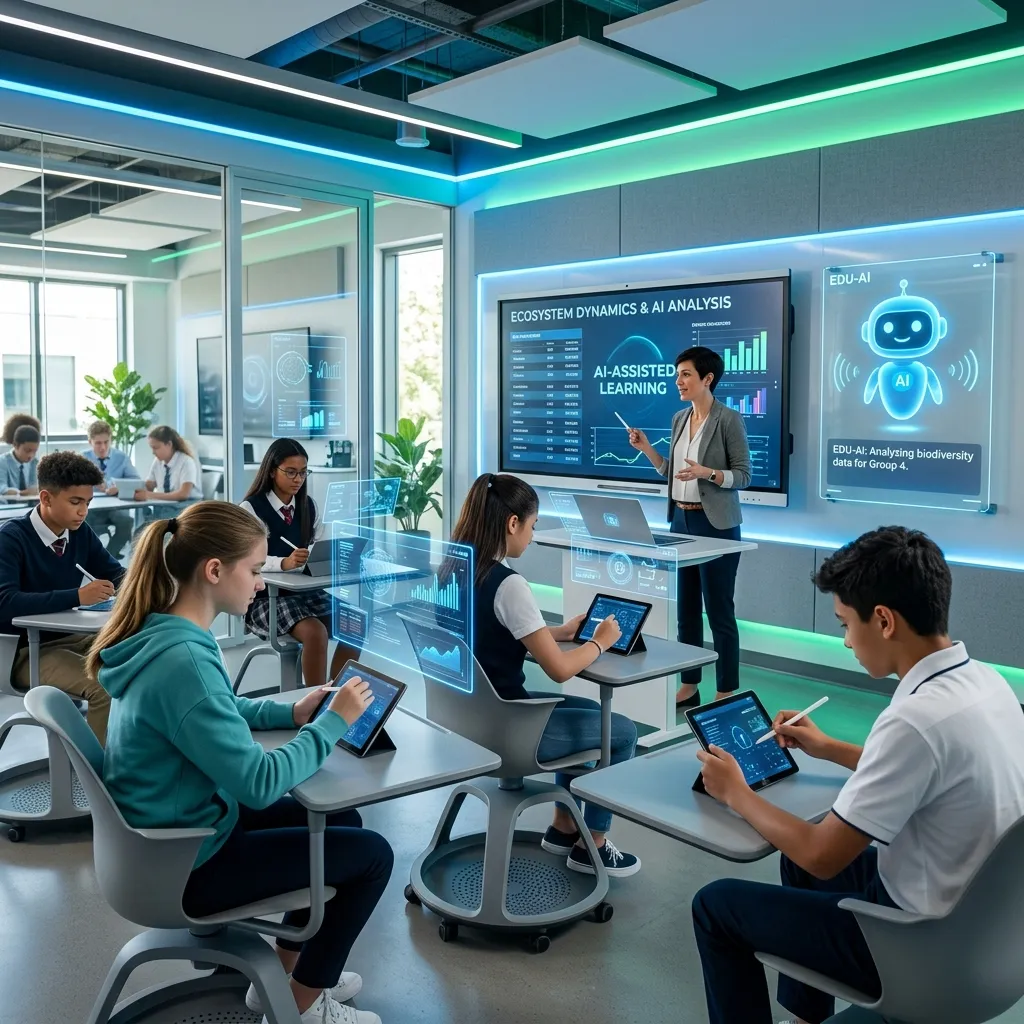
Education is the most powerful tool that shapes the future of societies. However, education systems are having difficulty keeping up with the pace of the digital age. While a student in 2026 can make an instant video call with someone on the other side of the world with the smartphone in his pocket, attendance at school can still be taken with a paper signature book. This contradiction shows how urgent digital transformation is in education.
What is Digital Transformation in Education?
Digital transformation in education is not just about putting smart boards in classrooms or distributing tablets to students. True transformation is the integration of technology into every stage of the educational process: from instructional planning to assessment, from school management to parent communication, from financial management to security systems.
The worldwide education technologies market has exceeded 400 billion dollars in 2026. Behind this growth lie the digital habits acquired during the pandemic period, the integration of artificial intelligence in education, governments’ investments in digital education and the increasing technology expectations of parents.
Learning Management Systems (LMS)
The digital backbone of a modern school is the LMS. Teachers upload course materials, assign assignments, create quizzes, and track student performance. Students access course notes, submit assignments, and receive feedback. Parents follow their children’s academic status in real time.
In 2026, LMS platforms are enriched with artificial intelligence. Adaptive learning algorithms create personalized learning paths by analyzing each student’s strengths and weaknesses. If a student is having trouble understanding fractions in math, the system automatically offers additional exercises and visual explanations.
Early warning systems proactively identify students at risk. Signals such as decrease in grades, increase in absenteeism, and homework delivery delay are evaluated together and a warning is sent to the teacher and school administration. The earlier intervention occurs, the better the student’s chance of recovery.
AI-Powered Individualized Education
Each student learns at different speeds, comprehends better with different methods, and is strong in different subjects. The traditional classroom model requires thirty students to be taught the same lesson, this inevitably causes some students to fall behind and others to become bored.
AI-powered individualized education solves this problem. AI creates the learning profile of each student: in which subjects he is strong, in which subjects he needs support, whether he learns better with visual or text-based materials, at what hours he studies more efficiently. This profile is constantly updated and provides actionable insights to the teacher.
Smart question generation creates questions of difficulty appropriate to the student’s current level. Questions that are too easy reduce motivation, questions that are too difficult create disappointment. AI aims for the optimal difficulty level, called the “flow state”.
e-Exam and Assessment Evaluation
Paper exams waste time and resources throughout the preparation, administration, collection and evaluation processes. Digital exam systems shorten these processes dramatically.
Automatic evaluation produces instant results for multiple choice and short answer questions. AI-powered assessment, on the other hand, can provide consistent and fair scoring even on open-ended questions, the teacher does not need to read every paper.
Question bank management allows thousands of questions to be classified on the basis of difficulty level, subject and achievement. AI suggests a balanced distribution of questions for each exam and prevents reuse of the same question.
Absence and Attendance Systems
Traditional attendance methods, name reading, signature book, waste more than ten minutes a day and have a high margin of error. Digital attendance systems reduce this process to seconds.
With facial recognition technology, attendance is automatically taken as soon as the student enters the classroom. The teacher does not need to take any action. The system automatically reports students approaching the attendance limit and sends a notification to the parents.
RFID or NFC card attendance can be used as an alternative to facial recognition. The student enters by scanning his/her school card at the turnstile or door reader.
School Safety
Student safety is every school’s top priority. Digital security systems provide protection far beyond traditional methods.
Turnstile and controlled entry systems ensure that only authorized persons enter the school building. The visitor management system records the identity information of each visitor to the school and tracks the duration of the visit.
The bus tracking system monitors the current location of school buses via GPS. Parents can see whether their children are on the shuttle, the estimated arrival time of the shuttle, and route information from the mobile application. An automatic alarm is triggered when the service moves out of the safe zone.
Canteen security digitally tracks what students eat and how much they spend. The allergen warning system can prevent students with identified allergy information from purchasing risky foods.
Parent Communication and Transparency
Parents want to follow their children’s school life closely. Digital parent portals provide this transparency. Instant grade notifications, absence alerts, homework tracking, bus location, canteen expenses and messaging with the teacher, everything in one application.
The online payment system enables digital collection of school fees, canteen balance and event fees. Transparency is guaranteed with a digital receipt.
Financial Management
The finance module for school management includes income-expense tracking, budget planning, payroll, collection management and financial reporting functions. All financial transactions are recorded digitally and can be audited.
IPEC Labs Smart School Ecosystem
The Smart School Ecosystem we developed as IPEC Labs is Türkiye’s most comprehensive education technology solution, offering all the above-mentioned modules on a single integrated platform. It carries schools into the future with facial recognition entry-exit, palm payment, IoT sensors, AI lesson assistant, early warning system, parent mobile application, e-exam module and MEB integration. The project is progressing with a seven-phase development plan and the total investment value is 70,000 dollars.
Subscribe to our newsletter!